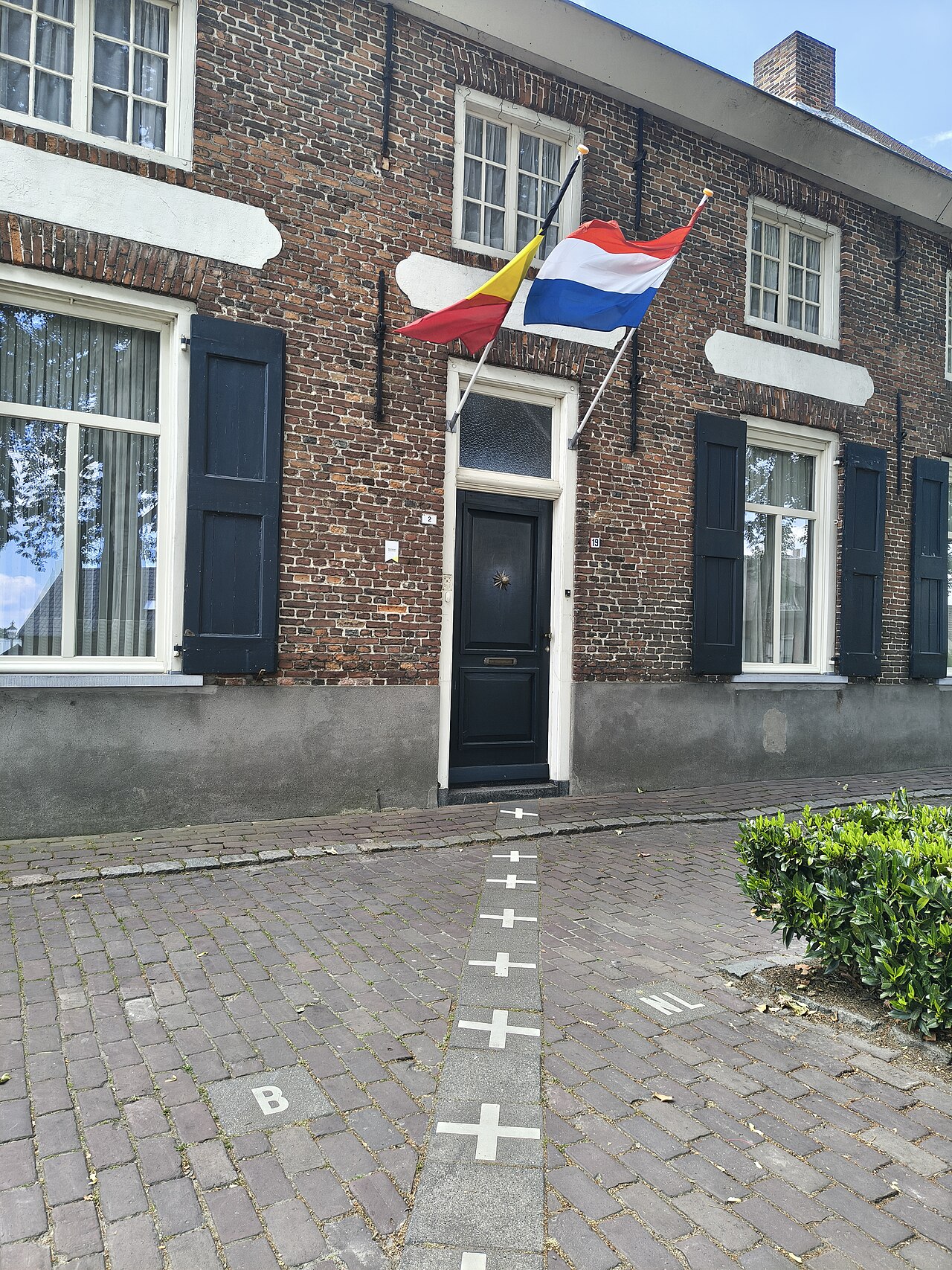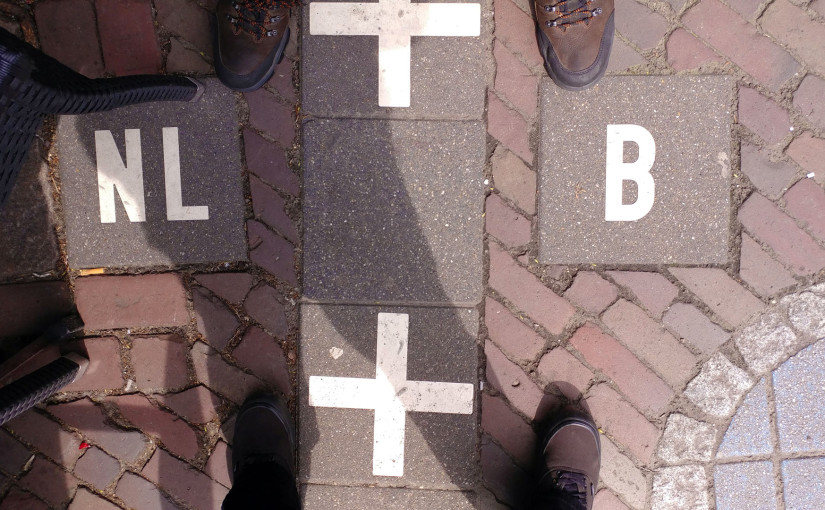
We went to Baarle-Hertog, where you might be either in Belgium or the Netherlands, depending on which side of the table you’re sitting.
The Belgian town of Baarle-Hertog is famous for it’s unusually complex borders. Only part of the town is within the Belgian mainland; the rest lies in 22 separate exclaves scattered about within the Netherlands. But to make matters worse, the Netherlands also has some exclaves of it’s own within the Belgian ones — or in other words, “counter-exclaves”.
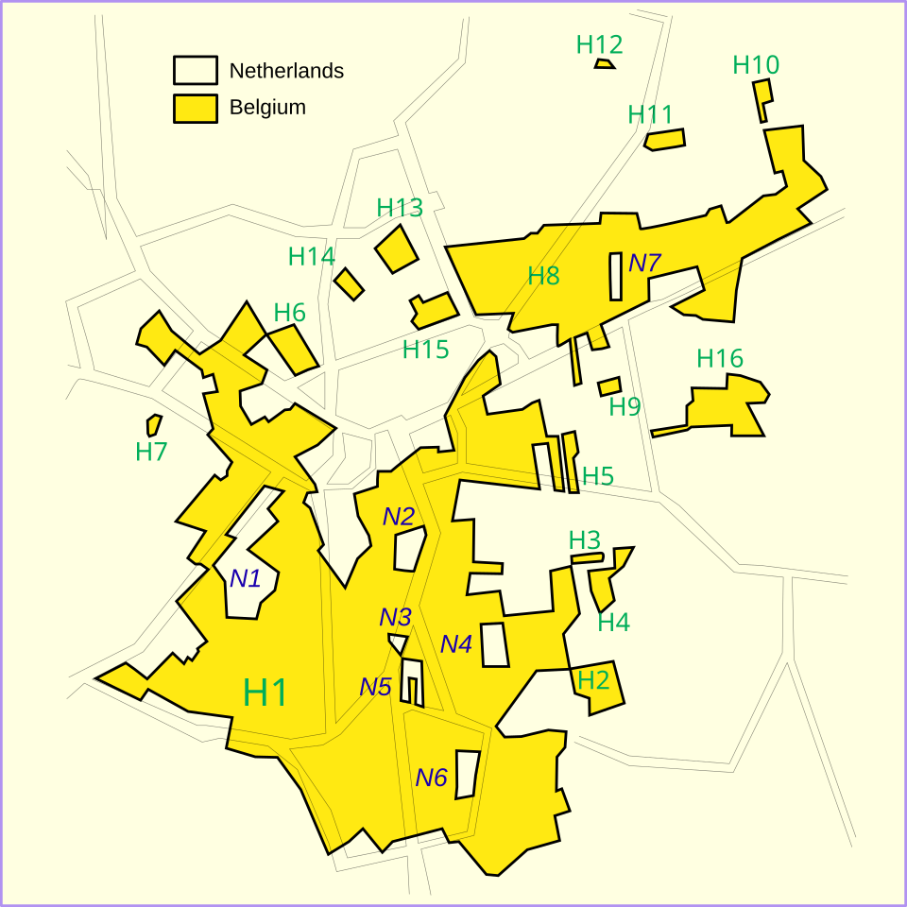
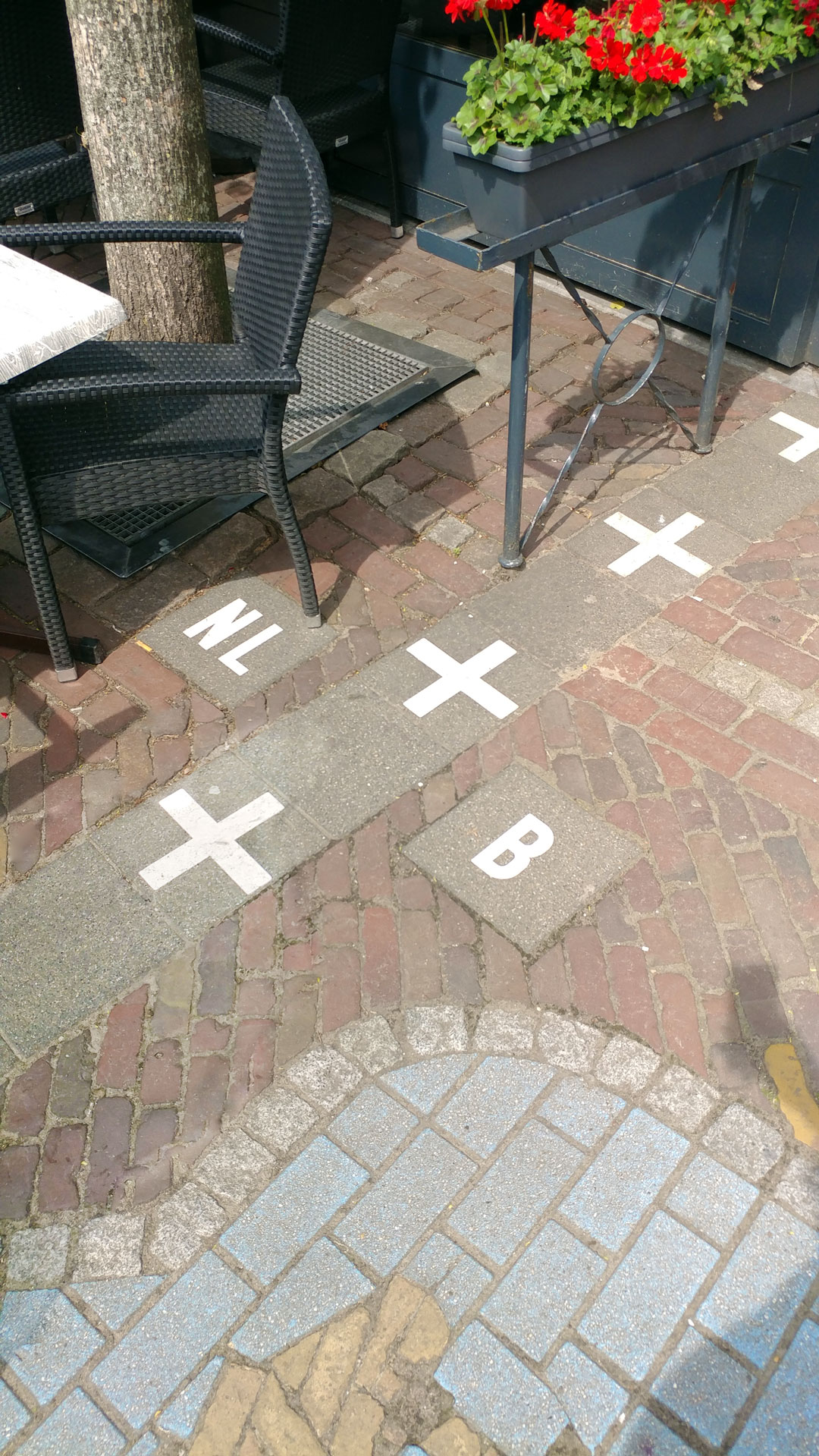
If you think the map is bad, wait until you see what this looks like on the ground. The border, simply delineated by stones or lines in the ground, zig-zags through the streets, across sidewalks, and even through the middle of individual café tables! Multiple buildings straddle the border, meaning you can change countries just by walking to the other end of the room.
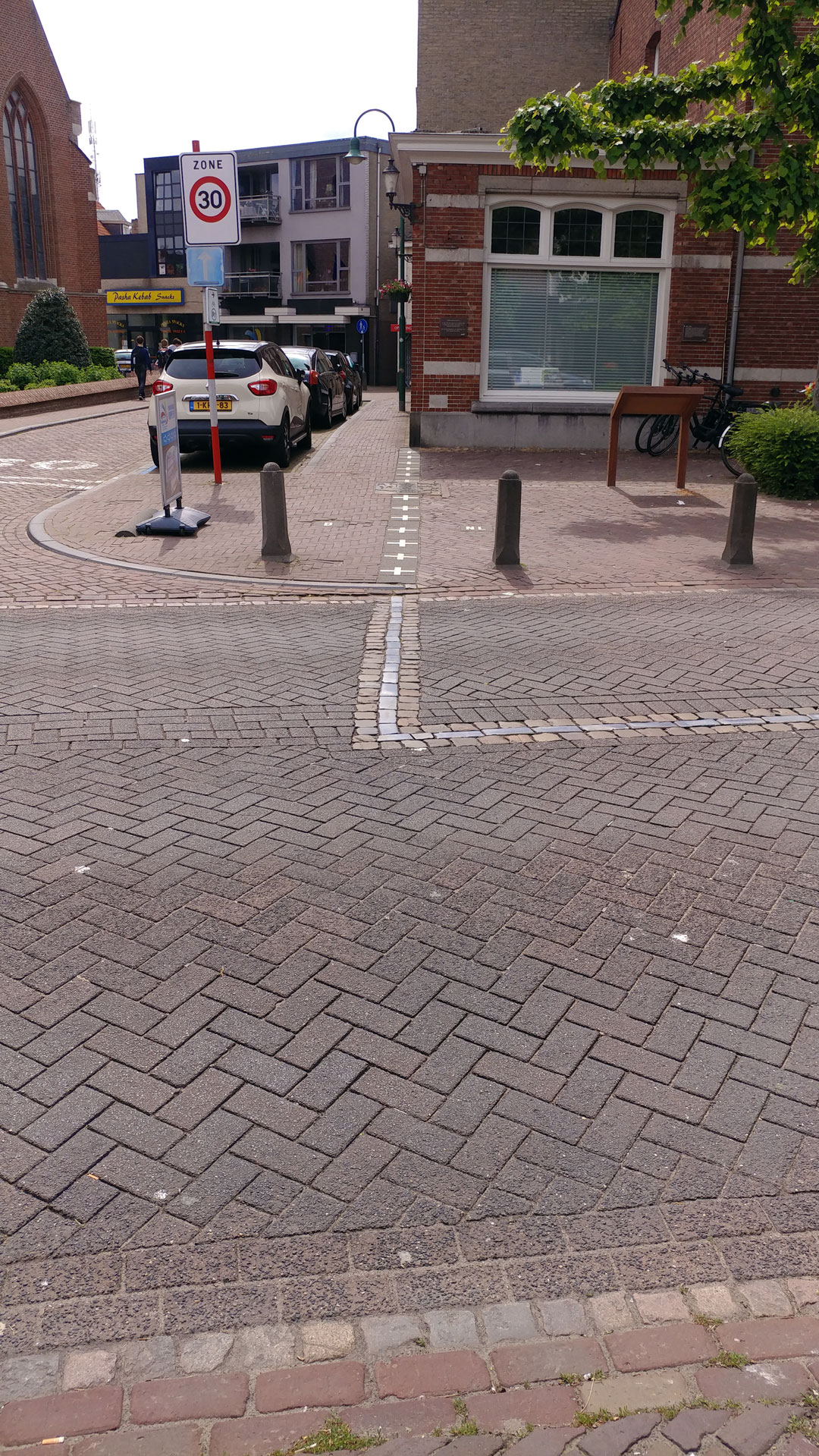
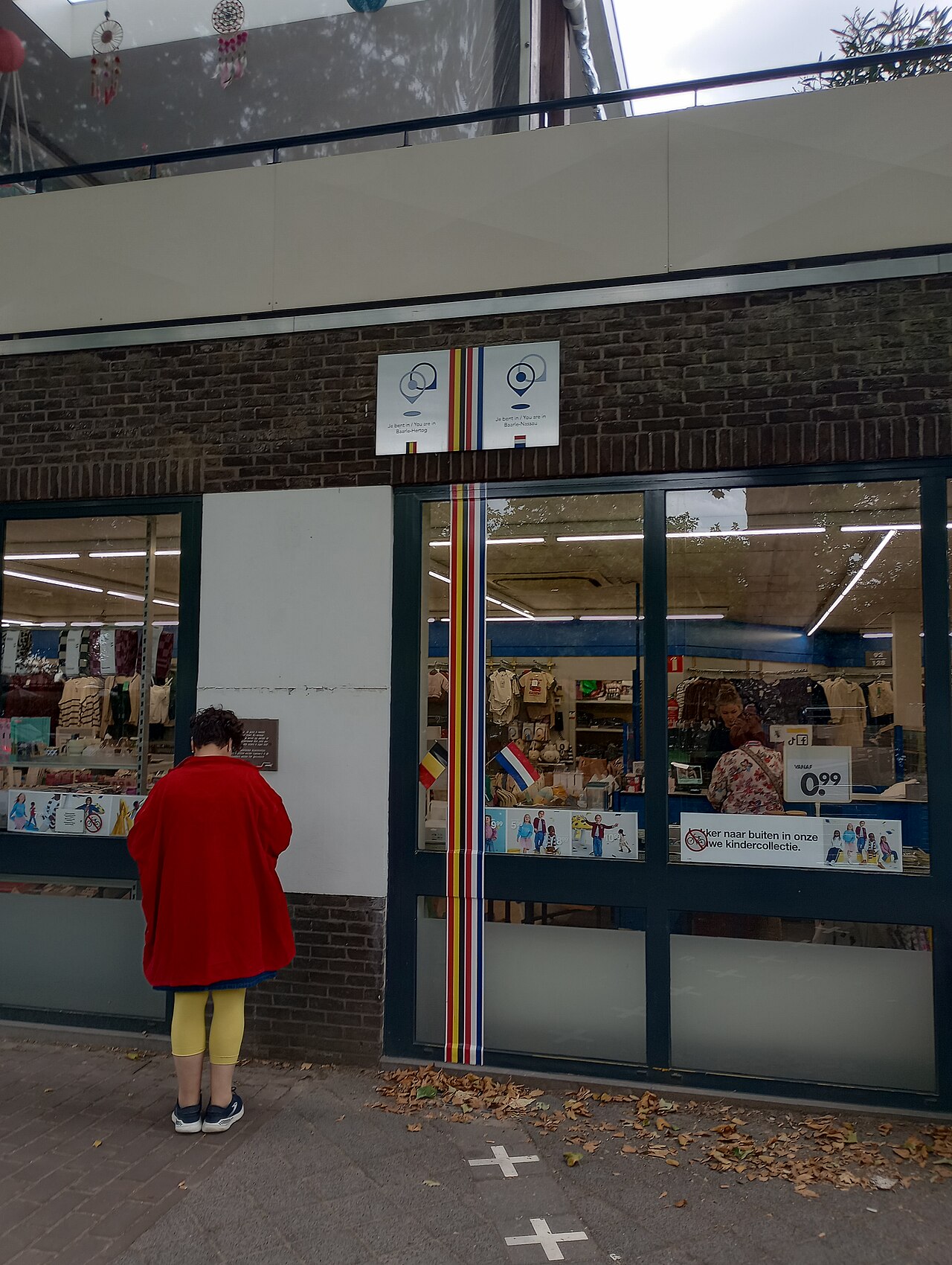
The complex border lines are the result of numerous treaties, agreements, land-swaps, and sales dating back to medieval times. Land distributions between the Lords of Breda and the Dukes of Brabant were eventually formalized by the Treaty of Maastricht in 1843, which established the unusual territorial arrangement we see today.
This unique arrangement has created some interesting situations throughout its history.
During the First World War, the Imperial German Army, which had occupied most of Belgium, could not enter the Belgian exclaves of Baarle-Hertog without crossing the Netherlands, which the Dutch government refused to allow. These areas therefore became a safe haven for Belgian refugees. Belgian resistance was also active here, where they even smuggled in a secret radio transmitter. During this time the Dutch government fenced off the areas and tightly controlled access in or out. (Unfortunately this situation was not repeated in the Second World War, when Nazi Germany invaded both Belgium and the Netherlands.)
While today the close integration of E.U. countries has minimized the differences of laws on each side of this border, there have in the past been some amusing situations. For example, at one time the restaurants in the Netherlands were required to close earlier than those in Belgium. For those restaurants straddling the border, this simply meant that customers had to move to a table on the Belgian side.
Baarle-Hertog is well worth a visit if you’re a geography nerd like us. The town’s layout is a real-life puzzle that’s fascinating to explore, and it’s sure to be one of the most unique places you’ll ever visit. You can even bring a friend or loved one and enjoy a couple of beers — while sitting in two different countries!